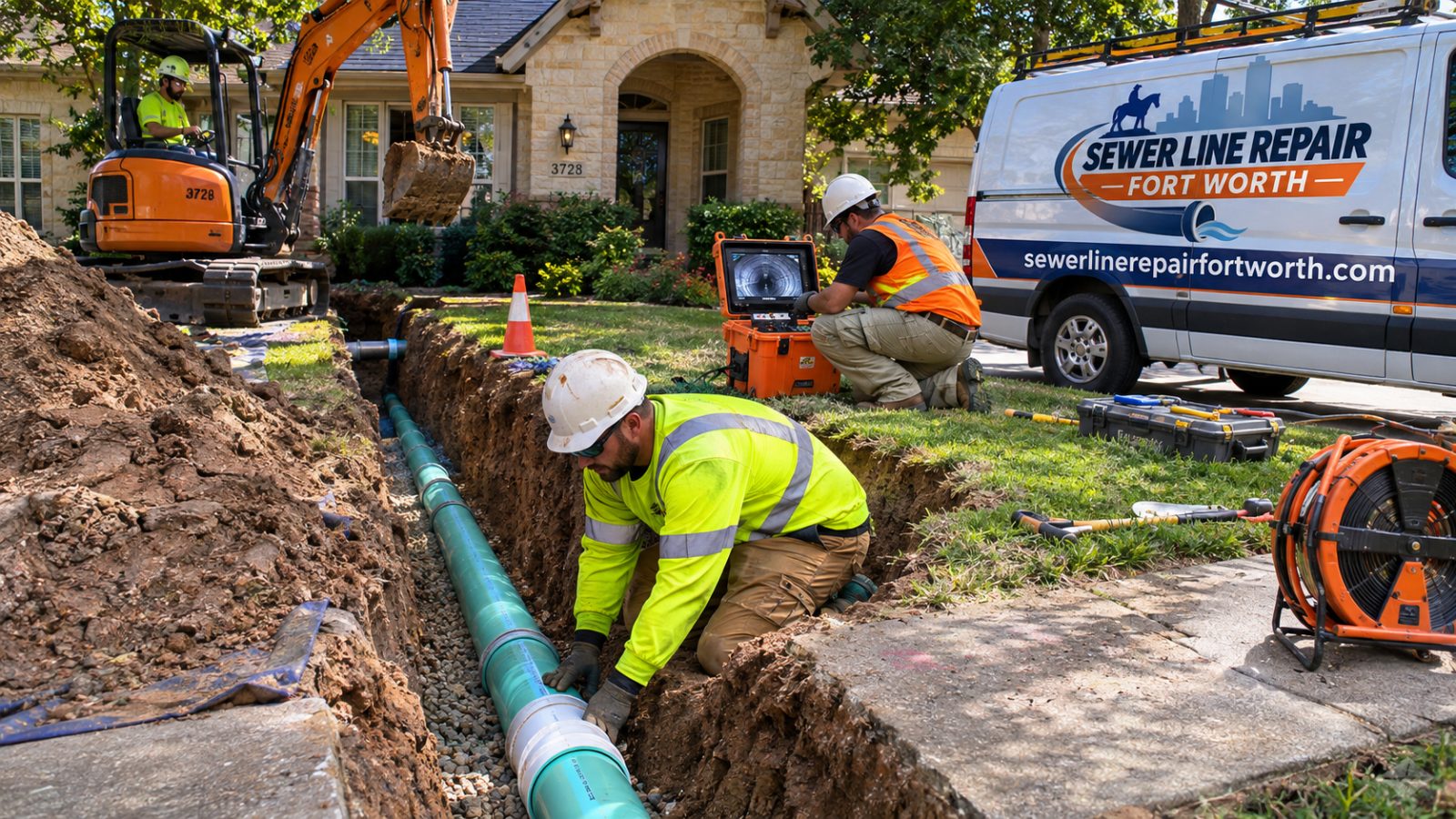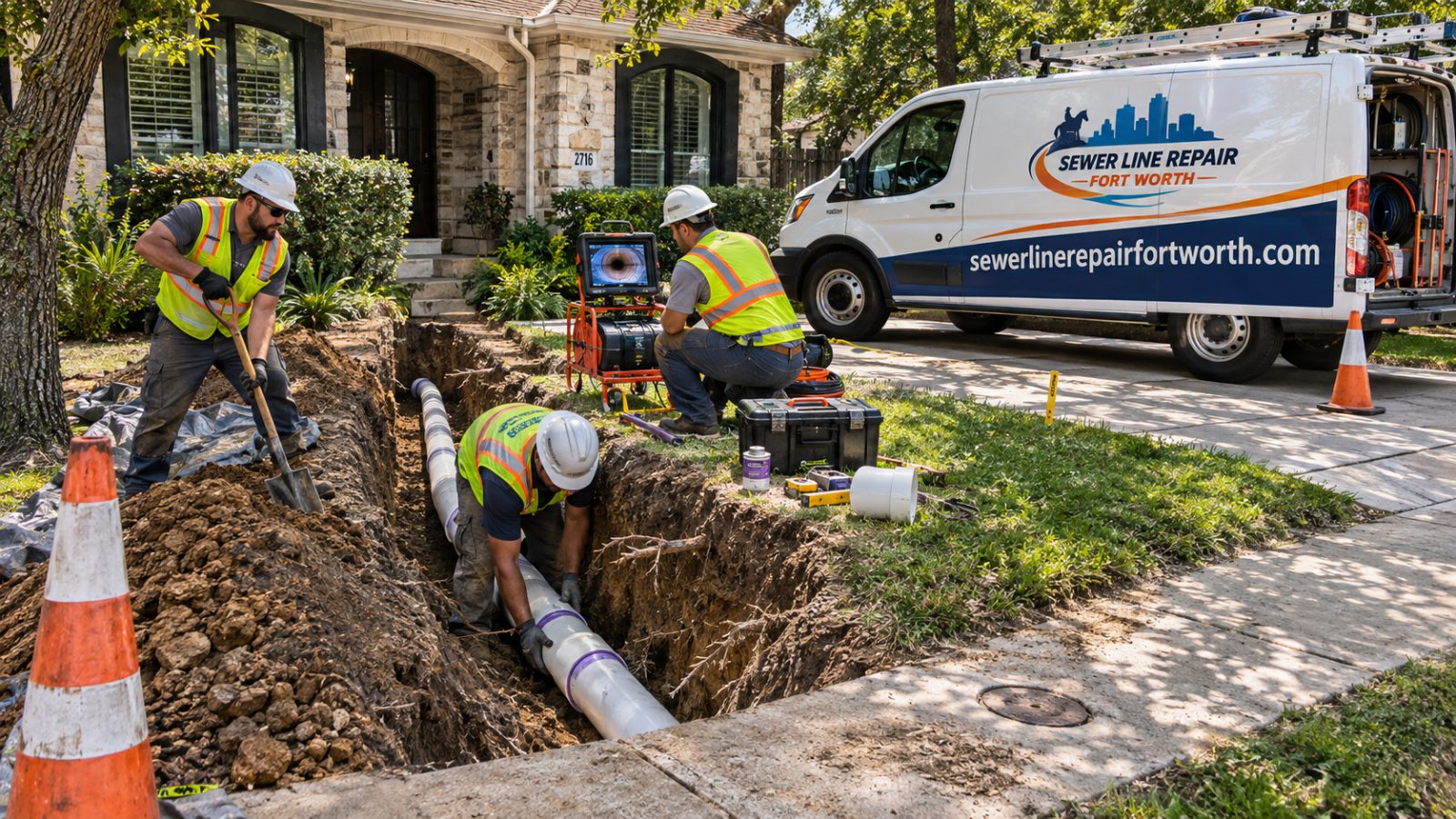
Underground Sewer Pipe Solutions
Sewer Line Repair Services in Fort Worth
Find out what may be causing your sewer problem. Get a Free Estimate
Underground Sewer Pipe Solutions
Find out what may be causing your sewer problem. Get a Free Estimate
A sewer line can develop problems gradually or fail without much warning. Cracks, separated joints, root intrusion, and pipe movement may interfere with wastewater flow. When the main sewer line is affected, several fixtures can develop symptoms at the same time.
Sewer line repair begins with determining where the defect is located and how much of the pipe is affected. A localized problem may call for a targeted repair, while widespread deterioration may require a different approach.
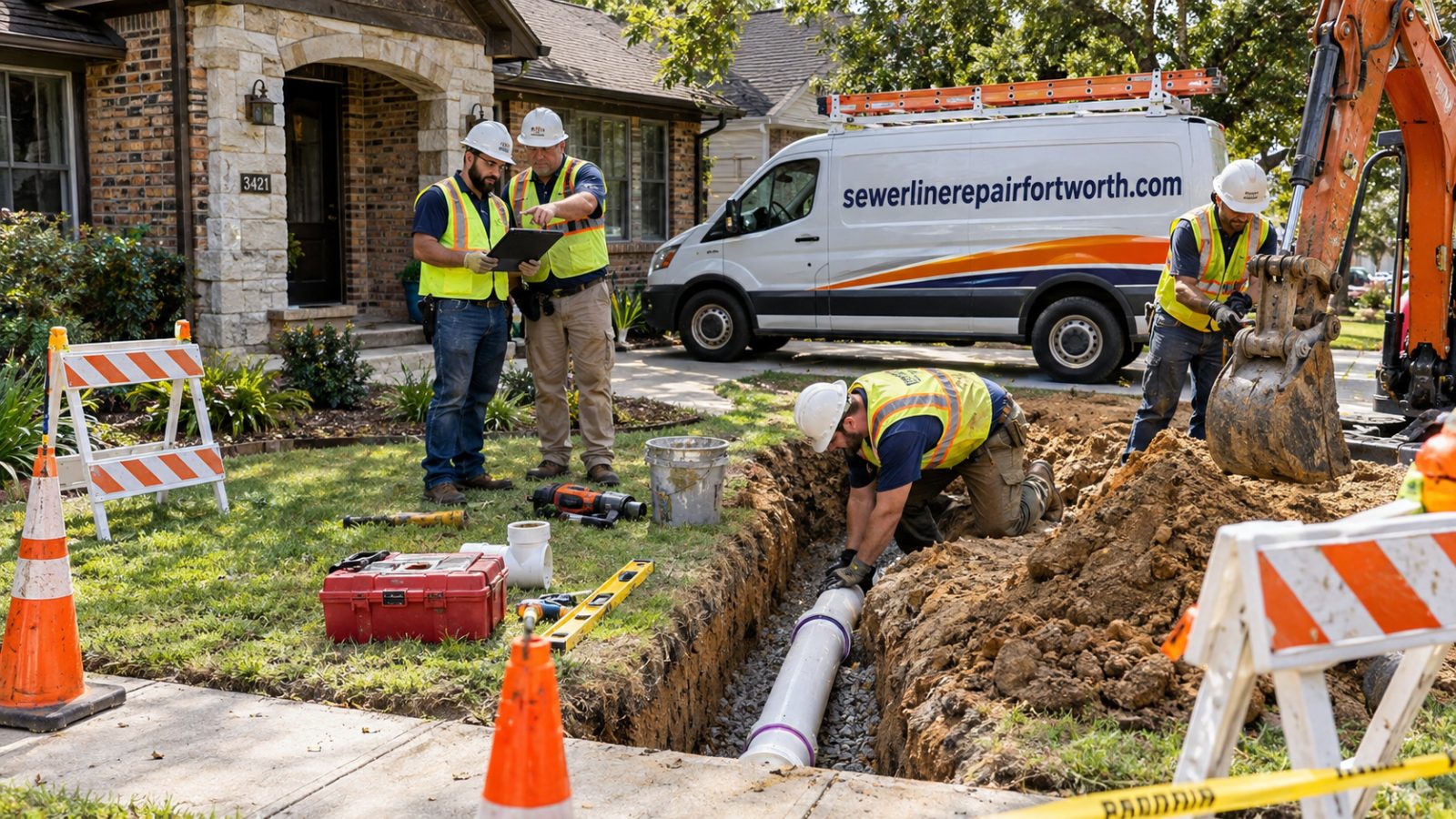
Underground sewer problems are not all the same. Understanding the type and extent of damage helps determine whether a section can be repaired or whether broader work should be considered.
Cracks may develop from age, soil movement, outside pressure, or existing material weaknesses. Small cracks can allow water to escape and may create openings for roots. The appropriate repair depends on the pipe material, crack location, and overall condition.
Pipe connections can shift or separate as surrounding ground conditions change. Misaligned joints may catch waste and create recurring restrictions. An evaluation helps determine whether the joint can be corrected locally or whether the affected section needs replacement.
Roots seek moisture and may enter sewer lines through cracks or loose joints. Removing roots can improve flow temporarily, but a damaged entry point may still require repair to reduce the likelihood of recurrence.
Repeated backups may indicate a persistent obstruction, sagging pipe, structural damage, or another main line defect. Identifying the underlying cause is important before choosing a long-term repair.
We focus on the damaged area and the condition of the surrounding pipe.
We help customers understand what a repair is intended to correct.
Repair planning should account for access, depth, and nearby improvements.
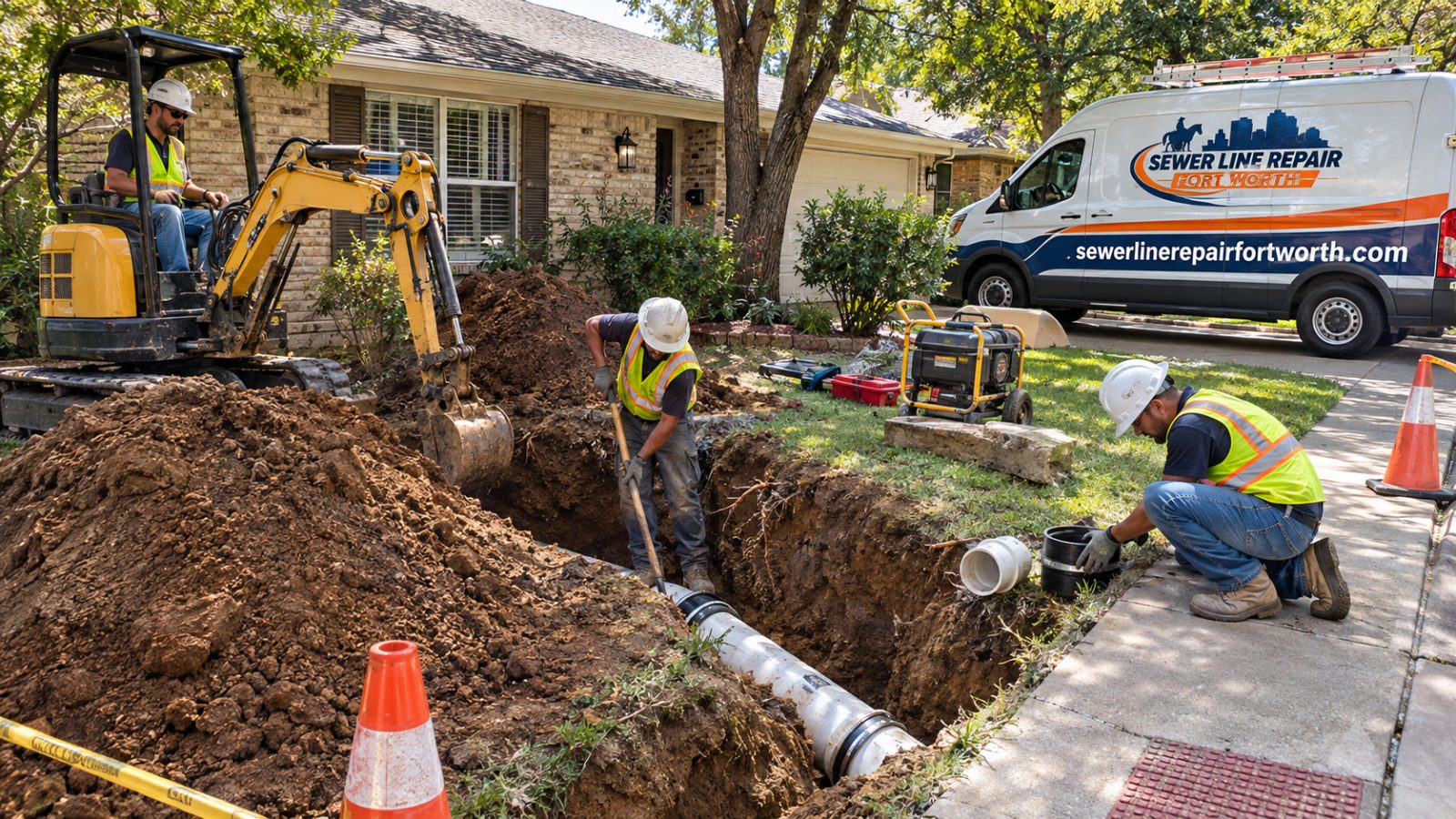
Request an evaluation for damaged sewer pipes in Fort Worth.
Free — no obligations
Tell us about backups, odors, slow drains, or other warning signs.
Determine which sewer section is affected and whether further inspection is needed.
Consider localized repair, trenchless methods, or replacement based on the findings.
Discuss access requirements, the expected scope, and any necessary restoration.